
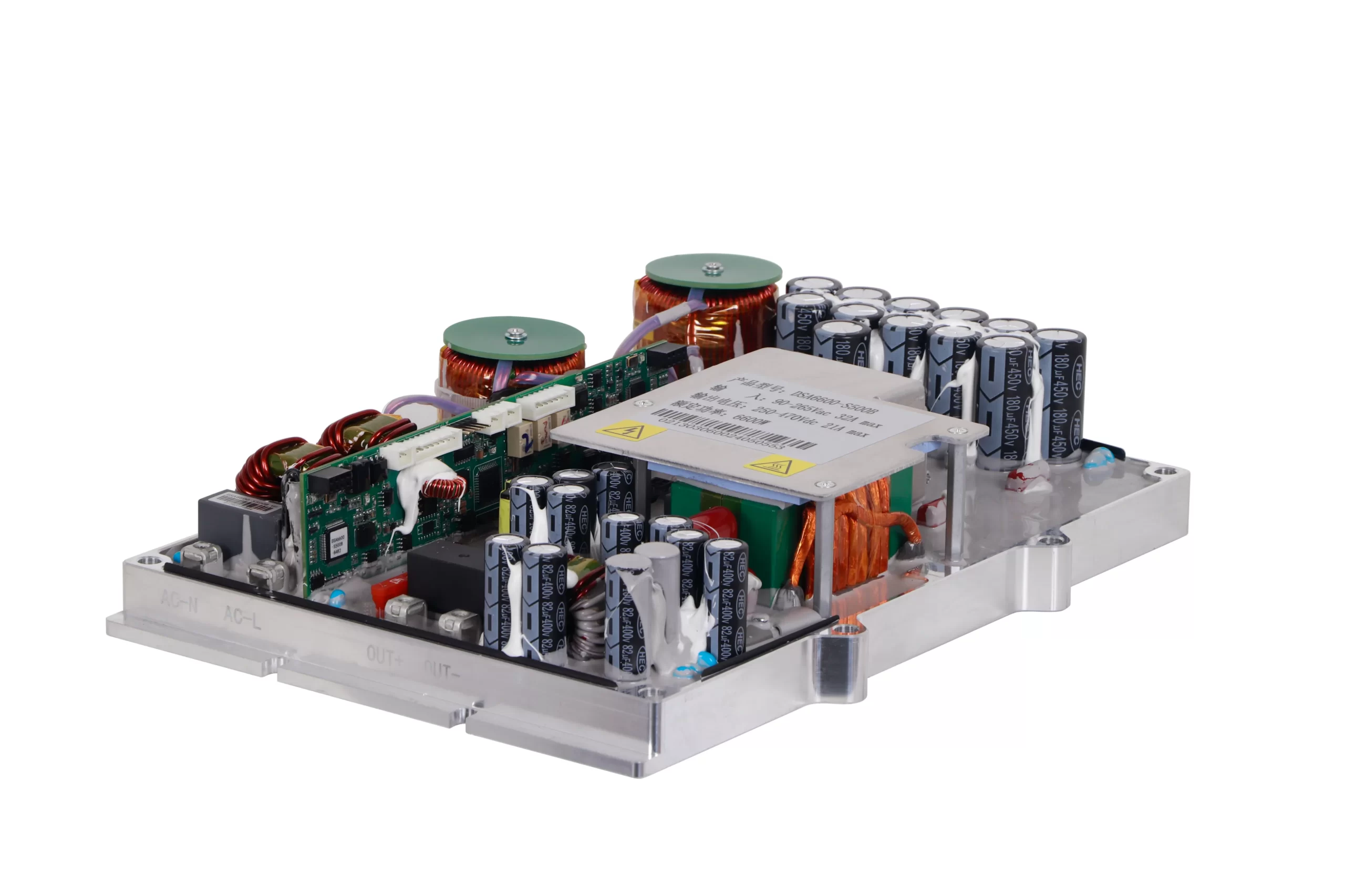
On-board-Charger 6.6KW OBC for Electric Vehicles
AC-DC Converter OBC On-board-charger (90Vac-256Vac) for Electric Vehicles: Key Functions & Applications
1. Core Functions
Voltage Step-Down: Converts high-voltage traction battery power (90Vac-256Vac) to stable 250Vdc -470Vdc.
Energy Efficiency: Typically achieves >94% efficiency ( LLC resonant topology).
| Technical Specification | Value |
|---|---|
| Input Voltage | 90Vac-256Vac |
| Output Voltage | 250Vdc -470Vdc |
| Max Output Current | 21A |
| Rated Power | 6.6KW |
| Maximum Power | 6.6KW |
| Peak Efficiency | >94% |
| Protection Rating | IP20 (Water-Cooling) |
| Communication Interface | CAN2.0 |
| Dimensions (L×W×H) | 288×200×64mm |
| Unit Weight | 5KG |
2.What is OBC and why Choose 6.6KW OBC?
2.1,Why Choose 6.6KW OBC?
A 6.6KW OBC offers the ideal balance of speed, cost, and compatibility for most EVs. Here’s why it’s the industry standard:
1. Faster Charging vs. Lower Power Options
| OBC Power | Charging Time (0→100% for 60kWh Battery) | Use Case |
|---|---|---|
| 3.3KW | ~18 hours | Low-cost EVs/slow overnight |
| 6.6KW | ~9 hours | Mainstream EVs (e.g., Nissan Leaf) |
| 11KW+ | ~5.5 hours | Premium/long-range EVs |
Example: A 6.6KW OBC adds ~40km range per hour (vs. 20km at 3.3KW).
2. Cost-Effectiveness
-
Infrastructure Compatibility: Works with widespread Level 2 AC chargers (208–240V, 30A circuits).
-
Lower Upfront Cost: 11KW+ OBCs require expensive 3-phase power and heavier cables.
3. Thermal & Weight Efficiency
-
Heat Management: 6.6KW generates less heat than 11KW+ units, reducing cooling needs.
-
Space-Saving: Lighter/smaller than high-power alternatives (e.g., Tesla’s 11KW OBC weighs 2× more).
4. Market Standardization
-
Adopted by Major OEMs: Nissan, Chevrolet, Hyundai use 6.6KW for mass-market models.
-
Aftermarket Support: Easier to replace/upgrade due to broad compatibility.
2.2 When to Choose Higher/Lower Power?
-
3.3KW: Budget EVs/short-range urban vehicles (e.g., Wuling Hongguang Mini EV).
-
11KW+: Luxury/long-range EVs (e.g., Tesla Model S) with 3-phase power support.
4. Keywords for Technical Documentation
-
“6.6KW OBC”
-
“On-Board Charger 6.6KW”
-
“EV Charger 6.6KW”
-
“AC-DC Converter for Electric Vehicles”
-
“Level 2 EV Charging Module”

RELATED PRODUCTS



About Us

The Progreen Technology team ranges from electrical design engineers to quality control experts, all of who provide the integral support required to guide each client.Client-oriented will be our focus.

